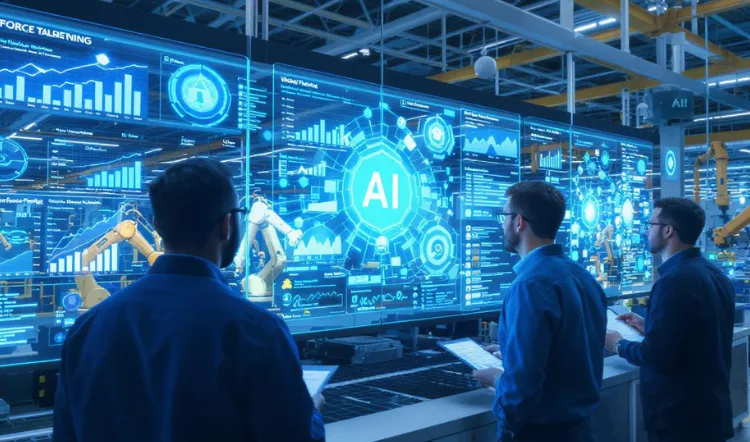
Manufacturing is entering a new era where intelligent technologies are reshaping how organizations operate, hire, train, and retain talent. While automation has been a part of production environments for decades, artificial intelligence is creating opportunities that extend far beyond machinery and production lines. Today, business leaders are increasingly exploring AI in manufacturing as a strategic tool that supports workforce development, operational efficiency, and long term growth.
As organizations face labor shortages, changing skill requirements, and rising competition, artificial intelligence offers practical solutions that help companies adapt. Moreover, it allows HR teams to make more informed decisions while supporting employees through ongoing workplace transformation.
Why Workforce Strategy Matters in Modern Manufacturing
A successful manufacturing operation depends on more than equipment and technology. People remain at the center of innovation, productivity, and business success. Consequently, workforce strategy has become a critical area of focus for manufacturers seeking sustainable growth.
Artificial intelligence helps organizations better understand workforce trends, predict staffing needs, and identify skill gaps before they become significant challenges. In addition, predictive analytics enables leaders to align hiring efforts with future production demands. As a result, businesses can make smarter talent decisions while reducing operational disruptions.
Furthermore, workforce planning powered by intelligent systems helps organizations remain competitive in rapidly evolving markets.
Transforming HR Functions Through Intelligent Technology
Human resources departments are increasingly adopting digital tools to improve employee management and organizational performance. AI in manufacturing supports HR teams by streamlining recruitment, onboarding, performance evaluation, and workforce analytics.
For example, advanced systems can analyze large volumes of candidate information and identify applicants whose skills closely match job requirements. Likewise, onboarding programs can be personalized based on employee experience levels and learning needs.
At the same time, HR professionals gain access to valuable data that supports decision making. Rather than relying solely on historical records, they can leverage real time insights to improve workforce engagement and retention strategies.
Consequently, HR departments become more proactive and strategic in supporting organizational goals.
Building Skills for the Future Workforce
One of the most significant benefits of AI driven transformation is its ability to support workforce development. As manufacturing technologies evolve, employees must continuously learn new skills to remain effective in their roles.
Artificial intelligence can identify competency gaps and recommend customized training pathways. Additionally, adaptive learning platforms help workers develop technical and operational skills at their own pace.
Meanwhile, organizations gain a clearer understanding of future workforce requirements. This allows HR leaders to invest in targeted training programs that prepare employees for emerging responsibilities.
Accordingly, businesses create a culture of continuous learning while strengthening employee confidence and productivity.
Enhancing Employee Experience and Engagement
Employee engagement remains a major concern across manufacturing industries. High turnover rates and workforce shortages can negatively affect productivity and profitability. Therefore, organizations are turning to intelligent workforce solutions to improve employee experiences.
Data driven insights help HR teams understand employee sentiment, identify workplace challenges, and address concerns before they lead to dissatisfaction. Similarly, personalized career development opportunities encourage workers to remain engaged and committed.
Furthermore, intelligent scheduling systems can improve work life balance by creating more efficient shift patterns. As a result, employees experience greater job satisfaction while organizations benefit from improved retention rates.
These developments align closely with current HR trends and insights that emphasize employee wellbeing and long term workforce sustainability.
Managing Change and Workforce Transition
The introduction of advanced technology often raises concerns about job displacement. However, successful organizations view artificial intelligence as a tool that enhances human capabilities rather than replacing workers entirely.
Effective change management requires transparent communication and strategic workforce planning. Therefore, HR leaders must actively involve employees in transformation initiatives and provide opportunities for skill development.
In many cases, routine tasks become automated, allowing employees to focus on higher value activities that require creativity, problem solving, and collaboration. Consequently, organizations can achieve greater efficiency while creating new career opportunities.
This balanced approach helps businesses build trust and support successful technology adoption.
The Connection Between Manufacturing and Business Intelligence
Modern manufacturing increasingly relies on data driven decision making. AI in manufacturing enables organizations to gather insights from production systems, workforce data, and operational processes.
These insights often extend beyond factory operations. For instance, leadership teams can combine workforce analytics with broader business information to improve strategic planning. Similar approaches are shaping technology insights, finance industry updates, sales strategies and research, and marketing trends analysis across multiple sectors.
As industries become more interconnected, organizations that effectively use intelligent technologies gain a stronger competitive advantage.
Creating a Future Ready HR Strategy
Future focused manufacturers recognize that technology investments must be supported by strong people strategies. While advanced systems can improve efficiency, long term success depends on workforce readiness and organizational adaptability.
Therefore, HR leaders should focus on aligning talent management initiatives with business objectives. This includes workforce planning, leadership development, employee training, and continuous performance improvement.
Additionally, organizations should establish clear metrics to measure the impact of workforce transformation efforts. By doing so, they can refine strategies and maximize the value of technology investments over time.
Notably, companies that integrate workforce planning with innovation initiatives are often better positioned to navigate industry changes and seize new opportunities.
Valuable Insights for Manufacturing Leaders
As artificial intelligence continues to evolve, manufacturers should prioritize workforce readiness alongside technology adoption. Investing in employee development today can reduce future skill shortages and strengthen organizational resilience.
Equally important, HR teams should leverage workforce analytics to anticipate talent needs, improve employee experiences, and support strategic decision making. By combining human expertise with intelligent technologies, manufacturers can create agile organizations capable of thriving in an increasingly competitive environment.
Connect with InfoProWeekly to discover expert perspectives, emerging trends, and actionable strategies that drive business success. Reach out today and stay ahead in a rapidly changing digital world.erging concerns, and potential workplace issues before they become larger challenges. Furthermore, this approach provides a more accurate representation of employee sentiment compared to traditional feedback methods that often capture only a single moment in time.
Because organizations operate in increasingly fast paced environments, timely insights have become essential. Therefore, many companies are integrating sentiment monitoring into their broader HR trends and insights strategies.
Transforming Employee Engagement
Employee engagement remains one of the most important indicators of organizational success. Engaged employees tend to be more productive, innovative, and committed to company goals. However, maintaining engagement requires continuous understanding and responsiveness.
Real time sentiment analysis allows HR teams to identify shifts in morale almost immediately. For example, employee reactions to leadership announcements, policy changes, or organizational restructuring can be measured quickly. In turn, HR professionals can address concerns before dissatisfaction spreads throughout the workforce.
Moreover, managers gain access to valuable information that helps them strengthen communication and improve team relationships. Consequently, employees feel heard, valued, and respected.
Supporting Better Decision Making
Data driven decision making has become a cornerstone of modern human resources management. While traditional metrics such as turnover rates and absenteeism remain useful, they often reveal problems after they have already developed.
By contrast, sentiment analysis provides an early warning system. When employees express frustration, uncertainty, or declining confidence, HR leaders can respond proactively. Additionally, organizations can evaluate the effectiveness of workplace initiatives in near real time.
As businesses increasingly rely on technology insights to guide strategy, sentiment data offers another valuable layer of intelligence. This deeper understanding enables more targeted actions that align with employee expectations and organizational objectives.
Strengthening Workplace Culture
A positive workplace culture does not happen by accident. Instead, it requires continuous attention, open communication, and a willingness to adapt. Real time sentiment analysis helps organizations understand how employees truly feel about their work environment.
For instance, recurring themes related to recognition, collaboration, or leadership effectiveness can be identified quickly. Subsequently, HR teams can implement initiatives that directly address employee concerns and reinforce positive cultural values.
Furthermore, companies that actively listen to their workforce often build stronger trust. As trust increases, employee loyalty and job satisfaction frequently improve as well.
Improving Retention and Reducing Turnover
Employee turnover can be costly and disruptive. Therefore, organizations are constantly searching for ways to retain top talent. One of the most significant advantages of sentiment analysis is its ability to uncover dissatisfaction before employees decide to leave.
When patterns of disengagement emerge, HR professionals can intervene with meaningful conversations, career development opportunities, or workplace improvements. Likewise, managers can provide additional support to employees experiencing challenges.
As a result, organizations create a more supportive environment that encourages long term commitment and reduces recruitment costs.
The Growing Role of AI in Human Resources
Artificial intelligence continues to influence nearly every business function. From recruitment to performance management, AI driven tools are helping organizations operate more efficiently. Real time sentiment analysis represents another important step in this evolution.
Not only does it help HR teams process large volumes of feedback, but it also uncovers trends that might otherwise remain hidden. Meanwhile, insights generated through AI can complement information gathered from IT industry news, Finance industry updates, Sales strategies and research, and Marketing trends analysis.
Because workforce dynamics often impact broader business performance, connecting these areas creates a more comprehensive view of organizational health.
Balancing Technology and Human Judgment
Although technology offers significant advantages, human judgment remains essential. Sentiment analysis should support HR professionals rather than replace them. Context matters, and emotional nuances can sometimes require deeper interpretation.
Therefore, organizations must combine technological insights with empathy, communication, and professional expertise. When used responsibly, these tools enhance rather than diminish the human side of human resources.
Additionally, transparency about data collection and employee privacy helps maintain trust. Employees are more likely to support sentiment monitoring when they understand its purpose and benefits.
Practical Insights for HR Leaders
Organizations considering sentiment analysis should begin with clear objectives and measurable outcomes. Equally important, HR teams should focus on creating feedback channels that encourage honest participation. Regular review of sentiment trends can reveal valuable opportunities for improvement.
Furthermore, combining sentiment data with existing HR metrics often produces more meaningful results. As workplace expectations continue to evolve, companies that embrace both technology and employee feedback will be better positioned for long term success. Most importantly, acting on insights is what creates real value. Gathering data alone is not enough. Employees want to see tangible improvements that reflect their voices and experiences.
Connect with InfoProWeekly today to stay informed with trusted analysis, practical insights, and forward thinking perspectives for modern organizations.